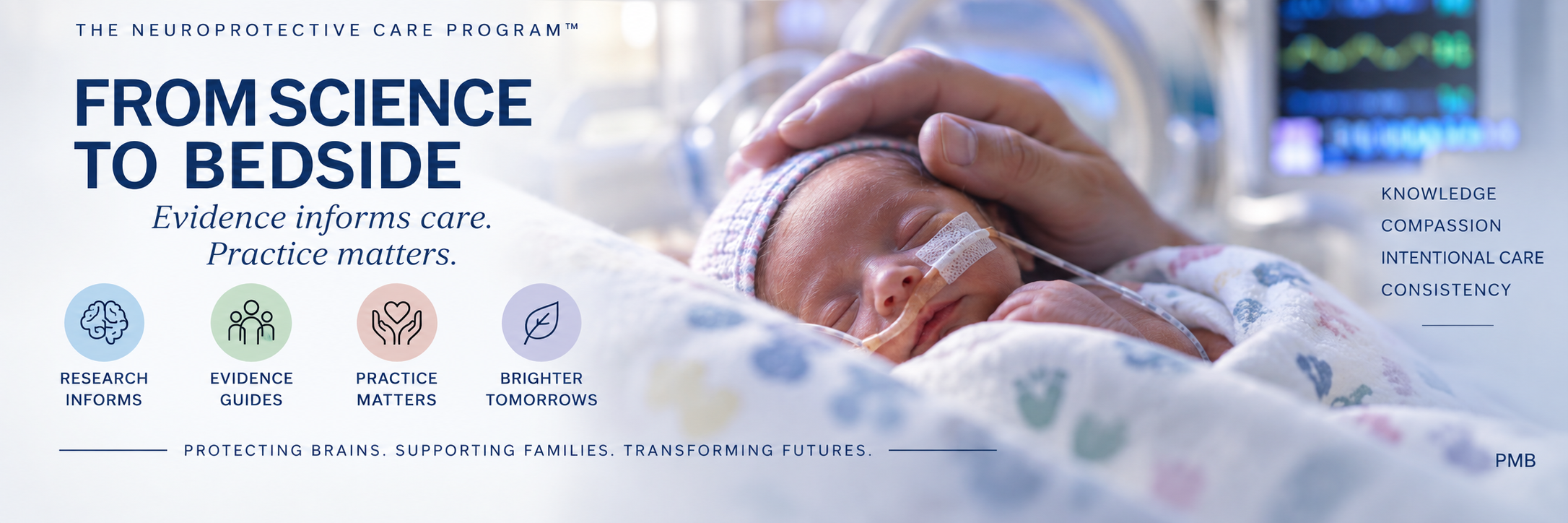
FROM SCIENCE TO BEDSIDE
Neuroprotective care begins with understanding the developing brain—but the science matters most when it changes what happens at the bedside.
THE SCIENCE → WHAT IT MEANS FOR THE INFANT → FROM SCIENCE TO BEDSIDE
THE DEVELOPING BRAIN
THE SCIENCE
↓
WHAT IT MEANS FOR THE INFANT
↓
FROM SCIENCE TO BEDSIDE
THE SCIENCE
During the final trimester and early neonatal period, the brain undergoes rapid growth and organization. Neurons form increasingly complex connections, cortical folding progresses, sensory systems mature, and the foundations for later motor, cognitive, behavioral, and emotional development continue to emerge. For infants born preterm, much of this development occurs outside the protected intrauterine environment.
WHAT IT MEANS FOR THE INFANT
For the preterm infant, the NICU becomes part of the environment in which the brain continues to develop. Necessary medical care occurs during a period of rapid neurologic maturation, while the infant is also adapting to sensory, physiologic, and caregiving experiences very different from those of the intrauterine environment.
FROM SCIENCE TO BEDSIDE
Neuroprotective care asks clinicians to consider not only what care an infant needs, but how that care is experienced by the developing brain. Every interaction becomes an opportunity to support physiologic stability, reduce unnecessary stress, protect sleep and recovery, provide developmentally appropriate sensory experiences, and strengthen connection with the family.
The science informs the care. The infant’s response guides how we deliver it.
THE PRETERM BRAIN: RAPID DEVELOPMENT & VULNERABILITY
THE SCIENCE
↓
WHAT IT MEANS FOR THE INFANT
↓
FROM SCIENCE TO BEDSIDE
THE SCIENCE
During the third trimester, the preterm brain is undergoing rapid growth and structural organization. Cerebral blood vessels and developing neural tissue remain immature, while systems responsible for regulating cerebral blood flow continue to develop. This combination can increase vulnerability to physiologic instability and fluctuations in cerebral perfusion during this critical period of brain development.
WHAT IT MEANS FOR THE INFANT
For the preterm infant, physiologic instability may occur during a period when the developing brain has limited ability to regulate changes in cerebral blood flow. Fluctuations in oxygenation, ventilation, blood pressure, temperature, and other physiologic conditions can therefore have particular significance during this vulnerable period.
FROM SCIENCE TO BEDSIDE
At the bedside, neuroprotective care prioritizes physiologic stability and minimizes avoidable fluctuations during care. Thoughtful handling, positioning, respiratory support, temperature management, pain and stress reduction, and intentional pacing of care can help support the infant during this vulnerable period of brain development.
Protect stability. Minimize unnecessary physiologic stress.
CUMULATIVE STRESS & THE DEVELOPING BRAIN
THE SCIENCE
↓
WHAT IT MEANS FOR THE INFANT
↓
FROM SCIENCE TO BEDSIDE
THE SCIENCE
During hospitalization, preterm infants may experience repeated exposure to necessary caregiving, procedures, pain, disrupted sleep, sensory stimulation, and physiologic stress. Because systems involved in stress regulation and sensory processing are still developing, the infant’s response to these experiences may extend beyond the individual event. Repeated or prolonged stress during this period has been associated with alterations in developing brain structure and function and later neurodevelopmental outcomes.
Not every stressful experience is toxic stress. NICU-based toxic stress is an emerging clinical and research concept rather than a bedside diagnosis.
Emerging neonatal literature is examining how repeated or prolonged stress may affect the developing infant, particularly when opportunities for buffering and recovery are limited. A 2026 concept analysis highlights physiologic and behavioral assessment, buffering support, nursing care, and family-integrated care as important areas for clinical practice and future research.
WHAT IT MEANS FOR THE INFANT
For the preterm infant, stress may be cumulative. A single necessary interaction may be well tolerated, while repeated handling, procedures, environmental stimulation, or interrupted recovery can become increasingly difficult to manage. The infant’s physiologic and behavioral response can help the care team recognize when additional support, a slower pace, or an opportunity for recovery may be needed.
FROM SCIENCE TO BEDSIDE
Neuroprotective care considers the cumulative experience of care, not only each individual task. Necessary care can be planned and paced intentionally by anticipating stress, coordinating care thoughtfully, providing comfort and containment, responding to infant cues, and protecting opportunities for recovery. When additional support may help, a second caregiver can focus on the infant while necessary care is performed.
Consider not only the care occurring now, but also what the infant has already experienced, whether recovery has occurred, and what will be asked of the infant next. Family presence and responsive caregiving can provide important sources of connection and buffering support.
Care has a cumulative effect. Protect the opportunities for recovery.
SLEEP, RECOVERY & THE DEVELOPING BRAIN
THE SCIENCE
↓
WHAT IT MEANS FOR THE INFANT
↓
FROM SCIENCE TO BEDSIDE
THE SCIENCE
Sleep is an active and essential part of early brain development. During sleep, important processes involved in brain maturation, neural organization, sensory processing, and learning continue to occur. Preterm infants have immature sleep–wake organization, and the NICU environment and necessary caregiving can frequently interrupt periods of sleep and rest.
WHAT IT MEANS FOR THE INFANT
For the preterm infant, sleep and recovery are part of the developmental experience of care. Repeated interruptions, caregiving demands, environmental stimulation, and difficulty returning to an organized state may reduce opportunities for sustained rest. Protecting periods of sleep and allowing time for recovery can help support the infant’s developing ability to regulate physiologic and behavioral states.
FROM SCIENCE TO BEDSIDE
Protecting sleep requires clinicians to consider when and how care is delivered. When clinically appropriate, care can be coordinated around the infant’s sleep–wake state, unnecessary interruptions can be reduced, environmental stimulation can be moderated, and recovery time can be protected following handling, procedures, or feeding. The infant’s cues help guide when interaction is appropriate and when rest should be preserved.
Sleep is not time between care. Sleep is part of the care.
SENSORY DEVELOPMENT & THE NICU ENVIRONMENT
THE SCIENCE
↓
WHAT IT MEANS FOR THE INFANT
↓
FROM SCIENCE TO BEDSIDE
THE SCIENCE
Sensory systems develop in an organized sequence beginning before birth and continuing throughout the neonatal period. Touch, movement, smell, taste, hearing, and vision mature at different times and interact with the developing brain. When an infant is born preterm, this development continues in the NICU, where sensory experiences may differ substantially from the protected and regulated intrauterine environment.
WHAT IT MEANS FOR THE INFANT
For the preterm infant, sensory experiences can be both supportive and stressful depending on developmental maturity, physiologic stability, timing, intensity, and the infant’s individual response. Neuroprotective sensory care is therefore not simply about reducing stimulation. It is about providing developmentally appropriate experiences while recognizing and responding when the infant shows signs of stress or overload.
FROM SCIENCE TO BEDSIDE
At the bedside, sensory experiences can be shaped intentionally. Light, sound, touch, movement, positioning, voice, and caregiving interactions can be adjusted according to developmental maturity, physiologic stability, and the infant’s cues. The goal is not sensory deprivation, but thoughtful sensory support—reducing unnecessary or overwhelming input while protecting opportunities for positive, developmentally appropriate experiences and family connection.
Stimulation with purpose. Let the infant’s response guide the experience.
PAIN, STRESS & THE DEVELOPING BRAIN
THE SCIENCE
↓
WHAT IT MEANS FOR THE INFANT
↓
FROM SCIENCE TO BEDSIDE
THE SCIENCE
Preterm infants have functional pathways for detecting and responding to painful and stressful experiences while systems involved in modulation and regulation are still developing. Necessary procedures and caregiving can therefore produce physiologic and behavioral stress responses. Repeated exposure to pain and stress during this period has been associated with differences in stress regulation, brain development, and later neurodevelopmental outcomes, although these relationships are complex and influenced by illness severity and other clinical factors.
WHAT IT MEANS FOR THE INFANT
For the preterm infant, pain and stress may be expressed through changes in physiologic stability, movement, facial expression, tone, behavioral state, and ability to remain organized. Because responses vary with gestational age, illness, prior experiences, and current condition, recognizing both physiologic and behavioral cues is important when assessing how an infant is experiencing care.
FROM SCIENCE TO BEDSIDE
At the bedside, pain and stress can be anticipated rather than addressed only after they occur. Neuroprotective care combines appropriate pain assessment and management with supportive strategies such as containment, positioning, developmentally appropriate comfort measures, thoughtful pacing, and reduction of unnecessary stimulation. When appropriate, family participation and a second caregiver can provide additional support during stressful or painful experiences, followed by time and support for recovery.
Support before stress. Comfort is care.
TOUCH, MOVEMENT & DEVELOPING MOTOR ORGANIZATION
THE SCIENCE
↓
WHAT IT MEANS FOR THE INFANT
↓
FROM SCIENCE TO BEDSIDE
THE SCIENCE
During the third trimester, the developing infant experiences increasing flexion, containment, and resistance to movement within the uterus while the musculoskeletal and nervous systems continue to mature. When birth occurs preterm, the infant enters an environment with different gravitational forces, positioning demands, and opportunities for movement at a time when postural control, muscle tone, and motor organization are still developing.
WHAT IT MEANS FOR THE INFANT
For the preterm infant, maintaining flexion, alignment, and organized movement may require additional support. Without the containment of the intrauterine environment, gravity and necessary caregiving can influence posture and movement. Supportive positioning, boundaries, and containment can help the infant maintain a more organized posture while allowing opportunities for spontaneous, developmentally appropriate movement.
FROM SCIENCE TO BEDSIDE
At the bedside, positioning and handling can be approached with purpose. Supporting flexion and alignment, providing appropriate boundaries and containment, minimizing unnecessary lifting and repositioning, and allowing the infant opportunities for spontaneous movement can support developing motor organization. When care requires greater movement or handling, a second caregiver can help maintain positioning, containment, and physiologic organization while necessary care is performed.
Position with purpose. Move with intention.
FAMILY CONNECTION & THE DEVELOPING BRAIN
THE SCIENCE
↓
WHAT IT MEANS FOR THE INFANT
↓
FROM SCIENCE TO BEDSIDE
THE SCIENCE
Early development occurs within the context of relationships. An infant begins experiencing familiar voices, touch, movement, scent, and other sensory input before birth, and these experiences continue to shape early interaction after birth. For the preterm infant, hospitalization may alter the expected opportunities for parent–infant contact and interaction during an important period of neurologic and relational development.
WHAT IT MEANS FOR THE INFANT
For the preterm infant, family presence can provide familiar and meaningful sensory and relational experiences within an unfamiliar medical environment. A parent’s voice, touch, scent, skin-to-skin contact, and responsive interaction can support connection and provide opportunities for comfort and co-regulation when appropriate to the infant’s condition and developmental readiness.
FROM SCIENCE TO BEDSIDE
At the bedside, family connection can be protected and supported as part of the infant’s care. When clinically appropriate, parents and caregivers can be encouraged to participate through presence, voice, touch, skin-to-skin care, containment, comfort, and involvement in caregiving. Clinicians can help families recognize and respond to the infant’s cues, building confidence while supporting individualized, responsive interaction.
Families are part of the care team. Connection is part of the care.
FEEDING & THE DEVELOPING BRAIN
THE SCIENCE
↓
WHAT IT MEANS FOR THE INFANT
↓
FROM SCIENCE TO BEDSIDE
THE SCIENCE
Feeding is a complex developmental process that requires coordination of multiple physiologic and neurologic systems. As infants mature, sucking, swallowing, breathing, sensory processing, motor organization, and behavioral state increasingly work together to support safe and effective feeding. For infants born preterm, these systems may still be developing when feeding experiences begin.
WHAT IT MEANS FOR THE INFANT
For the preterm infant, feeding readiness develops gradually and may vary from one experience to the next. Physiologic stability, respiratory support, behavioral state, endurance, motor organization, and the infant’s ability to coordinate sucking, swallowing, and breathing can influence how feeding is experienced. Recognizing readiness, stress, and disengagement cues helps caregivers support feeding as a developmental process rather than focusing only on volume consumed.
FROM SCIENCE TO BEDSIDE
At the bedside, feeding can be approached as an individualized developmental experience. Caregivers can assess readiness before beginning, support positioning and physiologic stability, pace feeding according to the infant’s response, and recognize when a pause or an end to the feeding may be needed. Positive feeding experiences prioritize safety, regulation, and responsive interaction while feeding skills continue to develop.
Feeding is more than volume. Readiness, regulation, and experience matter too.
RESPIRATORY STABILITY & THE DEVELOPING BRAIN
THE SCIENCE
↓
WHAT IT MEANS FOR THE INFANT
↓
FROM SCIENCE TO BEDSIDE
THE SCIENCE
The preterm respiratory system and the developing brain are closely connected through oxygenation, ventilation, and cerebral blood flow. Immature lungs and respiratory control can contribute to fluctuations in oxygen and carbon dioxide levels, while mechanisms that regulate cerebral blood flow are also still developing. Maintaining appropriate respiratory and physiologic stability is therefore particularly important during this period of rapid brain development.
WHAT IT MEANS FOR THE INFANT
For the preterm infant, respiratory instability may influence more than the lungs. Changes in oxygenation, ventilation, work of breathing, and carbon dioxide levels can affect physiologic stability during a period when the brain is particularly vulnerable. Respiratory care therefore requires attention not only to respiratory support itself, but also to the infant’s overall physiologic response and tolerance of care.
FROM SCIENCE TO BEDSIDE
At the bedside, respiratory support can be delivered with attention to both the lungs and the developing brain. Care can be planned to support stable oxygenation and ventilation, minimize avoidable physiologic fluctuations, reduce unnecessary handling, and coordinate respiratory interventions with positioning, comfort, temperature, and the infant’s behavioral and physiologic cues. The infant’s response helps guide the pace and support needed during respiratory care.
Support the lungs. Protect stability. Consider the developing brain.
THERMOREGULATION & THE DEVELOPING BRAIN
THE SCIENCE
↓
WHAT IT MEANS FOR THE INFANT
↓
FROM SCIENCE TO BEDSIDE
THE SCIENCE
During the third trimester, temperature regulation is still developing. Preterm infants have limited energy stores, immature skin, a relatively large surface area in relation to body mass, and reduced ability to generate and conserve heat. As a result, they are particularly vulnerable to heat loss and temperature instability during birth, stabilization, procedures, handling, and ongoing NICU care.
WHAT IT MEANS FOR THE INFANT
For the preterm infant, maintaining a stable temperature is part of maintaining overall physiologic stability. Heat loss can increase metabolic and oxygen demands, while temperature instability may occur alongside changes in respiratory, cardiovascular, and metabolic status. Protecting thermal stability therefore supports the infant during a period when energy reserves and physiologic regulation are still developing.
FROM SCIENCE TO BEDSIDE
At the bedside, thermal protection begins before the infant is handled and continues throughout care. Preparing the environment and equipment, minimizing unnecessary exposure, coordinating care efficiently, monitoring temperature trends, and restoring thermal protection promptly after procedures or handling can help reduce avoidable heat loss. Thermal needs should be individualized according to gestational age, clinical condition, environment, and the infant’s response.
Protect temperature. Protect physiologic stability.
SKIN INTEGRITY & THE DEVELOPING INFANT
THE SCIENCE
↓
WHAT IT MEANS FOR THE INFANT
↓
FROM SCIENCE TO BEDSIDE
THE SCIENCE
Preterm skin is structurally and functionally immature, particularly at the earliest gestational ages. The developing skin barrier has increased permeability and transepidermal water loss and provides less protection from heat loss, environmental exposure, adhesives, friction, and mechanical injury. Skin maturation continues after birth, making protection of this developing barrier an important component of physiologic care.
WHAT IT MEANS FOR THE INFANT
For the preterm infant, skin integrity is closely connected to physiologic stability, comfort, and protection. Heat and fluid loss, repeated adhesive use, medical devices, friction, pressure, and necessary procedures can challenge the immature skin barrier. Because even routine care may involve multiple points of contact with fragile skin, thoughtful handling and ongoing assessment are important throughout the infant’s hospitalization.
FROM SCIENCE TO BEDSIDE
At the bedside, skin protection begins with anticipating how each interaction may affect the infant’s fragile skin barrier. Careful positioning and handling, thoughtful use and removal of adhesives, attention to pressure and friction, appropriate skin assessment, and minimizing unnecessary manipulation can help protect skin integrity. During complex care, line or device management, or procedures requiring repositioning, a second caregiver can support the infant’s position and stability while the other caregiver performs the necessary task.
Protect the skin. Minimize unnecessary disruption.
BIRTH, TRANSITION & THE DEVELOPING BRAIN
THE SCIENCE
↓
WHAT IT MEANS FOR THE INFANT
↓
FROM SCIENCE TO BEDSIDE
THE SCIENCE
During birth and the early neonatal transition, the infant undergoes rapid physiologic adaptation as breathing, circulation, temperature regulation, and metabolic function shift from placental support to independent regulation. For the preterm infant, these systems are still immature, and this transition occurs during a period of increased neurologic vulnerability. Supporting a stable transition while minimizing avoidable physiologic fluctuations is therefore an important part of early neuroprotective care.
WHAT IT MEANS FOR THE INFANT
For the preterm infant, the first minutes and hours after birth bring multiple physiologic demands at the same time. Respiratory adaptation, temperature control, cardiovascular transition, glucose regulation, and necessary stabilization may all influence overall stability. Because the developing brain is particularly vulnerable during this period, thoughtful coordination of early care can help reduce avoidable physiologic stress while essential stabilization is provided.
FROM SCIENCE TO BEDSIDE
At the bedside, early stabilization can be planned as a coordinated neuroprotective experience. Preparing the environment and equipment before birth, supporting respiratory and thermal stability, minimizing unnecessary handling and transfers, coordinating procedures, and observing the infant’s response can help reduce avoidable disruption during transition. When additional support is needed, a second caregiver can help maintain positioning, containment, and stability while necessary interventions are performed.
Protect the transition. Stabilize with intention.
INTEGRATING THE SCIENCE AT THE BEDSIDE
Neuroprotective care does not happen within a single domain. At the bedside, physiologic stability, positioning, pain and stress, sleep, skin protection, sensory experience, feeding, and family connection often intersect within the same episode of care. Integrating the science means considering these needs together and allowing the infant’s response to help guide how care is planned, delivered, and followed by recovery.
WHAT DOES THIS BABY NEED FROM ME RIGHT NOW?
This question shifts the focus from completing a task to understanding the infant’s needs within that moment. The answer may involve stability, containment, comfort, reduced stimulation, additional time, family support—or another set of hands.
DOES THIS BABY NEED A SECOND SET OF HANDS?
Some care can be safely and comfortably provided by one caregiver. Other interactions may benefit from a second caregiver who can focus on the infant’s positioning, containment, comfort, physiologic and behavioral cues, and recovery while necessary care is performed.
TWO-PERSON NEUROPROTECTIVE CARE → THE TWO ROLES
One provides the care. One supports the baby.
CAREGIVER ONE — PROVIDES THE CARE
Performs the necessary care or procedure safely and efficiently while minimizing unnecessary handling and disruption.
CAREGIVER TWO — SUPPORTS THE BABY
Focuses on the infant by supporting positioning, alignment and containment; observing physiologic and behavioral cues; providing comfort; reducing unnecessary movement or stimulation; and communicating when the infant may need additional support, a change in pace, or an opportunity to recover.
TWO-PERSON NEUROPROTECTIVE CARE → STOP • PAUSE • GO
STOP • PAUSE • GO
Two-person care creates an opportunity for one caregiver to remain focused on the infant’s response while care is being performed. When clinically feasible, that caregiver can help the team recognize when to continue, when additional support is needed, and when the infant may benefit from a pause.
STOP — Recognize the infant’s response.
PAUSE — Reduce stimulation and provide support when needed and clinically feasible.
GO — Continue according to the infant’s readiness and stability.